

Book review: CPVA - An overview of children abusing parents
Child to parent violence and abuse (CPVA): An Overview of children abusing parents
By Tabatha Ross-Brown
(United States of America)
This book was reviewed by Lee Tempest, VisAble, July 2026.
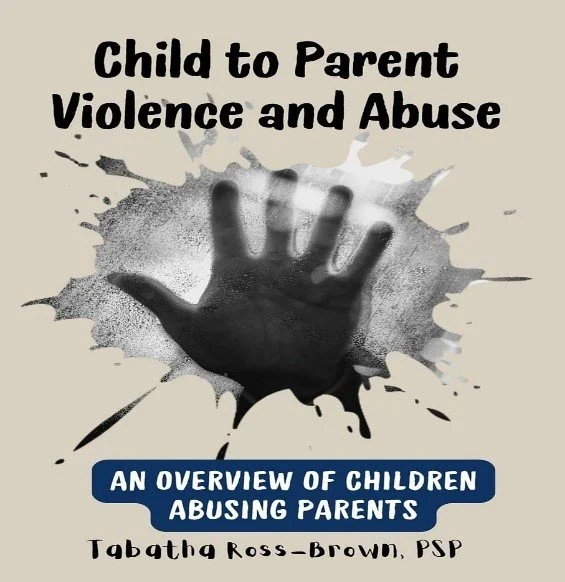
This book review highlights key themes from Tabatha Ross-Brown’s work on CPVA. Her book is distinctive in its focus on statistical data and in its willingness to address highly taboo and often hidden aspects of intra-family violence, including severe physical and sexual abuse perpetrated by children against parents, caregivers or siblings.
Tabatha Ross-Brown, is a Parent Support Partner working in child mental health services in the state of Michigan, USA, and has supported many parents and caregivers experiencing violence from their children. Through her professional role, she has observed not only the harm occurring within families, but also the secondary victimisation that occurs when professionals lack understanding of CPVA. (As is similar to our situation in Aotearoa New Zealand, families in the USA are frequently blamed, dismissed, or minimised, rather than supported.)
This dual exposure has had a significant emotional impact on Tabatha, contributing to vicarious trauma. Her book emerged as a response to this experience and explores the concept of moral injury due to the psychological harm caused by witnessing Systemic invalidation of parents whose experiences of violence are ignored or denied.
In response to these systemic gaps, Tabatha founded Parent Real Talk a U.S. based nonprofit organisation dedicated to supporting parents, caregivers, and guardians across the United States and Canada. It focuses on creating sustainable systemic change by equipping caregivers with practical tools to manage complex situations, including CPVA and high-stress caregiving environments.
U.S. Data on CPVA
Tabatha conducted an in-depth analysis of family violence data over a 13-month period from January 2025 to January 2026. The data was extracted from the Federal Bureau of Investigation (FBI), which has records of crime across all states and territories in the U.S. The analysis focused on incidents where victims were parents, step-parents, grandparents, or foster parents, and offenders were their children or dependent youth.
The offences examined included both physical violence and coercive behaviours:
Simple assault: a physical attack causing serious injury involving broken bones, loss of teeth, possible internal injury, severe laceration or loss of consciousness.
Aggravated assault: usually accompanied by a weapon or other means, likely to produce death or great bodily harm.
Intimidation: the use of threats, fear, or controlling behaviours to make a family member feel scared, powerless, or unsafe.
Rape: Penetration, no matter how slight, of the vagina or anus with any body part or object, or oral penetration by a sex organ, without the consent of the victim.
Homicide: murder or manslaughter.
It is important to note that CPVA is internationally recognised as significantly under-reported, meaning the true prevalence is likely to be much higher than the recorded figures.
Recorded incidents (Jan 2025 – Jan 2026): These statistics include both children under the age of 18 and adult children.
Simple assault: 151,053 cases
Aggravated assault: 24,611 cases
Intimidation: 29,667 cases
Rape: 565 cases
Homicide: 529 cases
Total recorded incidents: 206,426
These figures suggest that within a single year, parents and caregivers in the United States were recorded 206,000 times as victims of serious violence perpetrated by their own children. Given known under-reporting of CPVA due to the stigma and ‘blame and shame’ culture, this represents only a portion of the true scale of the issue.
Sexual Harm and Taboo Aspects of CPVA
Ross-Brown’s work also confronts taboo subjects such as rape of parents and caregivers by their children, an area that remains largely unspoken in both research and policy.
Survey data from VisAble in Aotearoa New Zealand found that 20% of parents and caregivers reported experiencing sexual harm from their child. However, respondents did not provide detailed examples of what this harm involved, despite providing examples for other forms of abuse.
Importantly, the U.S. data cited by Ross-Brown includes only rape and does not capture other forms of sexual harm or coercion. This suggests that the true prevalence of sexual abuse within CPVA contexts is likely to be under-represented in both datasets.
Parricide: Parents Killed by Their Children
Ross-Brown also examines parricide (the killing of a parent or caregiver by their child), using both statistical data and case studies. Her analysis highlights a consistent pattern: fatal violence is rarely an isolated incident.
In many cases, parents who were killed had been living with:
long-term violence
escalating aggression
persistent behavioural concerns.
These issues often began in early childhood. Parents and caregivers frequently raised concerns or warning signs with professionals or authorities, but these were often minimised or not taken seriously. As a result, opportunities for early intervention were missed, allowing violence to escalate - sometimes ending in homicide.
New Zealand Context
New Zealand Police homicide data (2007–2022) indicates that:
3% of homicide victims (41 individuals) were parents killed by their child
most cases involved adult children.
While parricide represents a relatively small proportion of overall homicides, it is a persistent and recurring pattern. On average, this equates to approximately two parent victims per year nationally, in our country.
In New Zealand, parricide is typically embedded within broader homicide and family violence statistics, rather than treated as a distinct category of research or policy focus. This contributes to its continued invisibility.
Reference
New Zealand Police. (2025). Homicide victims report 2023 and historical NZ murder rate report 1926–2023.
Sibling Violence
Ross-Brown also highlights sibling abuse, emphasising that violence between children is another under-recognised issue.
Across the United States, these violent incidents to siblings were recorded:
Aggravated assault: 19,289
Intimidation: 16,583
Rape: 4,190
Homicide: 155
Total incidents: 92,280
These figures demonstrate that intra-family violence between children is both widespread and serious, yet similarly under-acknowledged and ignored.
Conclusion
Overall, Ross-Brown’s work exposes the hidden scale and severity of CPVA in the U.S.A. Similarly to Aotearoa New Zealand, it reveals systemic gaps in recognition, reporting, and support, with many cases going unacknowledged and under-reported. In both contexts, families often face stigma, limited resources, and a lack of specialised services, leaving them to cope with the impacts of violence and abuse in isolation. Additionally, professionals in both countries lack adequate training to identify and respond effectively to CPVA.
CPVA must be recognised as a distinct and serious form of family violence in both the U.S. and New Zealand, requiring:
greater research attention
stronger policy recognition
improved professional training
more accessible and specialised support services
community awareness.
Tabatha’s book can be purchased online at Amazon.
Upcoming 1-day CPVA conference - register now
We’re delighted to announce that Tabatha Ross-Brown is a speaker at VisAble’s forthcoming CPVA conference, which will be held online on 14 October 2026.
Find out more information and registration details.
The conference date has been chosen in recognition of International Child to Parent Abuse (CPA) Awareness Day.