


The missing conversation about contact after CPVA
This is written by a parent who has lived with child‑to‑parent violence and abuse. It speaks about different forms of violence, including coercive control. It speaks to endurance, to doing your best in an impossible situation, and to surviving sustained coercive control and violence that is rarely understood or believed when it is inflicted by a child.
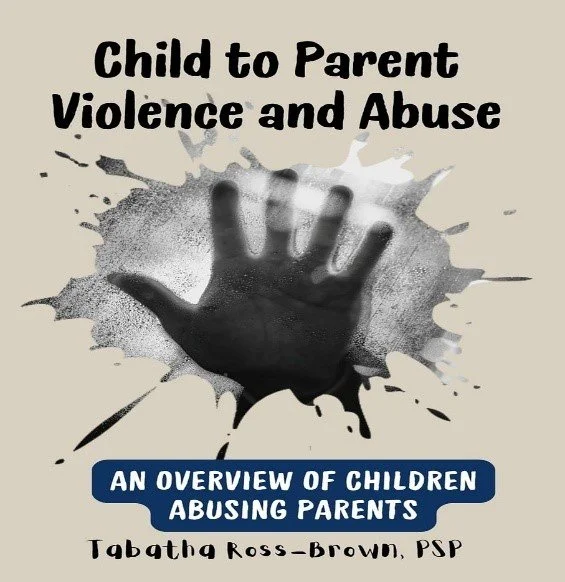
Book review: CPVA - An overview of children abusing parents
Child to parent violence and abuse (CPVA): An Overview of children abusing parents
By Tabatha Ross-Brown
(United States of America)
This book was reviewed by Lee Tempest, VisAble, July 2026
Siblings matter too
Supporting children and young people affected by Child to Parent Violence and Abuse (CPVA).
If you live with a brother or sister whose behaviour sometimes feels confusing, upsetting, or frightening, you are not alone. This guide is here to help you understand what might be happening, how it can affect you, and what you can do to stay safe and get support.
Some families go through very tough times. When a child hurts, scares, or tries to control a parent or caregiver, this is called Child to Parent Violence and Abuse or CPVA for short.
Even if the behaviour isn’t directed at you, it can still affect how your home feels. Living in this situation can be confusing, stressful, and exhausting, and it may leave you feeling scared, worried, sad, angry, or unsure about what to do.
Am I really catastrophising?
But here is the reality, my life is grounded in what others would call catastrophe.
Living with ongoing violence from a child with high and complex needs is exhausting.
And even that word exhausting falls painfully short.
This is bone-deep weariness.
The kind that settles into your mind, body, and spirit.
It is rinse. Repeat. Every single day. For years.
I can’t switch off
This piece was written from the perspective of a parent who has lived for many years with child‑to‑parent violence. It reflects not just moments of fear, but the long-term impact of living in a constant state of alertness, where home no longer feels fully safe and the body never quite learns to relax.
I can’t switch off, I think I am under constant threat – when your own child is the danger
I don’t understand why my body does this.
Mother to Mother
Mother to Mother
This poem is written from lived experience and reflects the voices of mothers supporting children with trauma and neurodevelopmental differences.

Living within the disability narrative: Parenting when violence is not always recognised or understood
This reflection is written from lived experience as a parent within the disability community. It is not a critique of its values, which I share, but a call to broaden the conversation to include families living with more complex and high-risk realities.
One of the greatest challenges in these situations is that the reality of violence from a child within the home is often invisible to anyone outside the family living with it. This invisibility shapes how experiences are understood, discussed, and supported. When it is visible, it is often minimised or reframed as part of the disability.

Let’s talk about coercive control
This is written by a parent who has lived with child‑to‑parent violence and abuse. It speaks about different forms of violence, including coercive control. It speaks to endurance, to doing your best in an impossible situation, and to surviving sustained coercive control and violence that is rarely understood or believed when it is inflicted by a child.

Push and pull – it’s a head **ck
By Beattie – a mother living with child‑to‑parent violence and abuse
Last night, my adult son who no longer lives at home called me.
By the time the conversation ended, I was left spinning… again.
I had blocked his number because our interactions usually escalate into threats and abuse. This time, the call came from a new number. I answered without realising.