


National Inquiries that inform good practice
SAFEGUARDING FOUNDATIONS

It is a national disgrace
that hundreds of thousands of children, young people and adults
were abused and neglected
in the care of the State and faith-based institutions.
The findings of the Royal Commission into Abuse in Care (2025) make essential reading for providers of safeguarding / whakahaumarutia.
This section summarises key findings of this and other relevant Inquiries, to help you consider how you’ll apply the learnings at your place, and for the people you support.
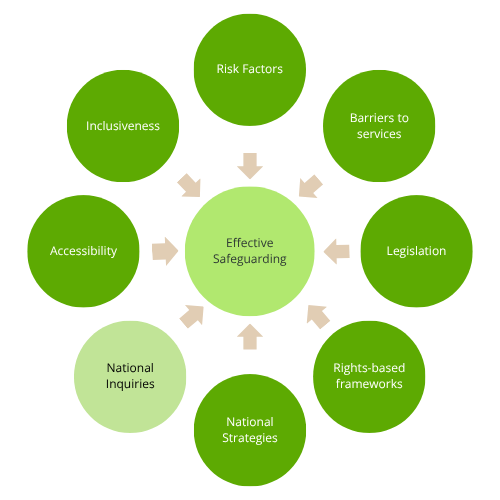

National Inquiries – findings that inform good practice

Royal Commission into Abuse in Care
This Commission was an independent investigation into abuse and neglect that happened to children, young people, and vulnerable adults in state or faith-based care. Its final report was published in 2025.
Whanaketia - through pain and trauma, from darkness to light
Thefinal report on the abuse and neglect of children, young people and adults
in the care of the State and faith-based institutions in Aotearoa New Zealand between 1950 and 1999
Visit: abuseincare.org.nz
The findings state:
Scale of Abuse: Of the estimated 655,000 children, young people and adults in state and faith-based from 1950 to 2019, it is estimated that up to 256,000 were abused and neglected.
The true number will never be fully known as records of the most vulnerable people in Aotearoa New Zealand were never created or were lost and, in some cases, destroyed.
Systemic Failure: The commission found "repeated and catastrophic failures" by the state and faith-based institutions to protect those in their care.
Human rights not upheld: Critical rights, such as those guaranteed to Māori in te Tiriti o Waitangi, and human rights, that should have protected people in care, were ignored and overlooked altogether.
Nature of Abuse: Sexual, physical, and emotional abuse was widespread, with many victims experiencing severe trauma.
As one example, the Government formally acknowledged that torture occurred at the Lake Alice Psychiatric Hospital Child and Adolescent Unit.
Targeting of Vulnerable:Māori, Pacific peoples, and disabled people were disproportionately represented among those abused.
National Disgrace: The report termed the findings a "national disgrace", calling for urgent systemic overhaul.
For your action
All providers of residential supporting living, all providers of State care and care in faith-based institutions, and all safeguarding / whakahaumarutia providers have a responsibility to read and reflect on the final report of the Royal Commission into Abuse in Care.
Access the full report: Whanaketia – Through pain and trauma, from darkness to light – June 2024.
Whanaketia : Recommendations for the future
Whanaketia calls for a complete overhaul of Aotearoa New Zealand’s State and faith-based care system in social welfare, disability, mental health, education, transitional and law enforcement and pastoral care settings. The ultimate goal is to ensure that no individual experiences abuse or neglect and that whānau receive the necessary support to lead fulfilling lives.
Safeguarding providers and other professionals / practitioners who are providing safeguarding / whakahaumarutia support:
As you read Whanaketia, think about how you can contribute to the Royal Commission’s ‘call to action’, and particularly in respect of:
having a safe and well-trained workforce
giving everyone in Aotearoa New Zealand the knowledge and tools to contribute to preventing abuse and neglect
upholding people’s rights.
-

Decide whether your organisation will include, in a leadership policy and/or its business and action plans, its commitment to ensuring change, the role your organisation can play, and how you will measure and monitor that commitment.
-
Decide how you’re going to support and upskill your staff/ kaimahi in identifying, responding to, stopping and preventing violence, abuse or neglect.
-

Decide how you’re going to make a difference for disabled people – and anyone either experiencing, or at risk of, violence, abuse or neglect.

Access to training
VisAble offers interactive training to help you develop a deeper understanding of these topics and why they’re important.
The training also enables you to explore how to apply the information at your place, with your staff (kaimahi) and in your services, to make a difference for disabled people.
We can also provide training for tāngata whaikaha Māori, disabled people, families, whānau and caregivers.
Find out more about our training and resources Or contact us at info@visable.co.nz.
From Whanaketia, for your action:
Every New Zealander has a role to play.
“It is time to challenge New Zealanders.
The phrase out of sight, out of mind
is no longer acceptable.”
— Survivor, Sir Robert Martin
“We all have a role to play in ensuring that Aotearoa New Zealand recognises what happened and why, seeks to redress those wrongs, and builds a future where abuse and neglect in care have been eliminated.”
Wai 2575: Health Services and Outcomes Inquiry
The Waitangi Tribunal’s Health Service and Outcomes Inquiry (Wai 2575) was initiated Iin 2016 and is an inquiry into the Crown’s response to health inequities experienced by Māori.
Stage two of the Wai 2575 inquiry covers 3 priority areas:
Māori with lived experience of disability
mental health (including suicide and self-harm)
alcohol, tobacco and substance abuse.
Between 2022 and 2024, the Inquiry focused on hearing claims relating to Māori with lived experience of disability.
Closing submissions were completed in December 2024.
The report on findings has yet to be published.
Source: Ministry of Health Wai 2575 Health Services and Outcomes Inquiry | Ministry of Health NZ